
Author: Martin Trust Center
This post is from one of our member organizations — Business and Technology University (BTU) in Tbilisi, Georgia — and is written by Ani Vashakmadze, Associate Professor, Business and Technology University (BTU), Georgia; and a PhD Candidate, Kyoto Institute of Technology.
Rethinking Innovation Through Inclusion
Across innovation hubs from Tbilisi to Kyoto, one truth stands out: some of the most brilliant minds continue to be overlooked.
People with disabilities and neurodiverse innovators bring perspectives that can redefine how we build technology – yet they are often invisible within entrepreneurship ecosystems.
My journey from Georgia to Japan has led me to ask: what if inclusion were not an ethical afterthought, but the very strategy that drives innovation?
From Emerging to Advanced Innovation Systems
Inclusive Innovation – the international design of entrepreneurship ecosystems that empower people with disabilities – remains largely underdeveloped in emerging economies.
In countries like Georgia, inclusion is often framed as a welfare or social issue rather than a catalyst for innovation. As a result, individuals with disabilities are seldom positioned as founders, designers, or investors, and inclusive startups face systemic funding barriers.
To bridge this gap, we began exploring effective models of inclusion from mature ecosystems. At Kyoto Institute of Technology, we began researching a design framework comprising three pillars: co-design, cultural values, and environmental sustainability, all aimed at fostering inclusive entrepreneurship. Our work focuses on developing service design models that help ecosystems evolve organically, adapting global insights to local realities.
The project began in Okinawa, where fieldwork revealed how participatory innovation and community-led technology design create multidimensional value – economic, social, cultural, and ecological.
The next stages are:
(1) testing the research framework according to international acceleration practices (as in the United States and EU), and
(2) applying the framework in Georgia or in other fast-emerging innovation ecosystems seeking sustainable models of inclusion.
The research aims to show that inclusive design is not a privilege of advanced economies but a strategic pathway for sustainable growth in transitional contexts.
Bridging Two Worlds: Georgia and Japan
Georgia sits at the crossroads of Europe and Asia, a country with deep traditions of knowledge, creative work, and resilience.
As head of international relations at Georgia’s Innovation and Technology Agency and the EU EIC Ambassador, I witnessed the energy of startups in the region but also the absence of inclusive mechanisms. Japan, with its human-centered technology culture, offered a counterpoint.
My time in Japan began when I won the SDG Global Leader Program organized by the Japan International Cooperation Agency (JICA). Later, at Kyoto Institute of Technology, we started research about co-creation design merged with Japan’s philosophies of purpose and imperfection-shape Innovation that values empathy, continuity, and collective meaning.
The experience in Kyoto inspired a new question: how can the precision of Japanese design, the institutional maturity of developed acceleration models, and the ability of emerging entrepreneurship merge into a single, adaptive model for inclusion?
The research question has drawn strong institutional interest. Business and Technology University (BTU), where I currently serve as Associate Professor, has become an active partner in advancing this research, particularly in developing an Inclusive Innovation funding model and embedding inclusive design into entrepreneurship education.
The research demonstrates how inclusive innovation can serve as a bridge between academic inquiry, creative industries, and environmental sustainability.
Focusing the Lens: Mental and Cognitive Inclusion
As the research evolved, we decided to narrow the term “disability” to focus on mental and cognitive disabilities – communities often least represented in innovation ecosystems yet profoundly rich in creative potential. This ongoing phase of the study centers on the pre-accelerator sector, particularly within creative industries and environmentally oriented ventures.
This reasoning is twofold:
- The creative sector offers fertile ground for participatory design and narrative-driven entrepreneurship.
- Environmental innovation provides tangible platforms – from sustainable design to nature-based technologies – where inclusive collaboration produces measurable social and ecological impact.
By starting here, the research builds an applied model that links cognitive diversity, creativity, and sustainability – illustrating how inclusive innovation can flourish in small or transitional ecosystems.
Inclusive Innovation, According to Our Research
Inclusive Innovation is more than accessibility. It is the recognition that people with disabilities and neurodiverse individuals are innovators in their own right –bringing unique cognitive approaches and lived experiences that reframe how we design, build, and distribute technology.
The research highlights three interlocking principles:
- Co-design – Partnering with people with disabilities through design and design-making processes.
- Strategic drifting – a deliberate movement across cultural and institutional systems that allows innovation to emerge from relationships, lived experiences, and evolving contexts.
- Inclusive Funding – creating mechanisms, such as an inclusive innovation fund, that invest in disability-led entrepreneurship and measure value beyond profit.
Fieldwork in Okinawa: A Living Laboratory
Since 2024, we have been conducting fieldwork research in Okinawa with community organizations, disability-led enterprises, and technology labs. Two strands have been especially revealing:
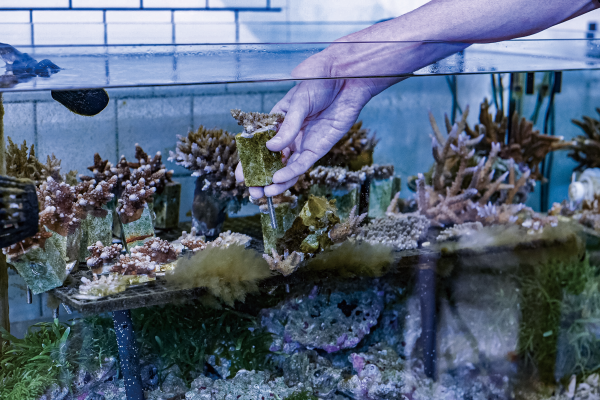
- Environmental Innovation – coral restoration projects co-led by individuals with cognitive differences, blending sensory experience, local ecology, and social innovation.
- Technology co-design – neurodiverse software teams co-creating assistive tools and workflow systems that challenge conventional “efficiency” paradigms.
The research shows that inclusive innovation generates more than social outcomes: it produces new business logistics and ethical approaches to design that resonate globally. Traditional startup funding often overlooks inclusive ventures because they do not align with standard growth metrics.
Conclusion
- Inclusive innovation is not a niche agenda. It is a strategic opportunity for ecosystems seeking resilience, creativity, and sustainable growth.
- By integrating co-design, strategic drifting, and inclusive funding, emerging and advanced economies alike can unlock talent that has remained systemically invisible – and, in doing so, generate new forms of economic and social value.
- The research invites collaboration across borders: entrepreneurs building disability-led ventures, accelerators exploring inclusive funding, universities testing co-design frameworks, and policymakers sharing the next generation of innovation ecosystems.
- The message is clear: the future of entrepreneurship belongs to ecosystems that recognize – and invest in – the full spectrum of human creativity.
- Inclusion is not an add-on. It is the next transformation in innovation.

Follow